Thứ Năm, 30 tháng 10, 2014

Kỹ thuật cho hươu sao ăn

- Cho ăn đúng cách: Hươu giống chủ yếu hoạt động vào ban đêm, ban đêm hươu ăn tới 60% tổng số thức ăn của khẩu phần, vì vậy mỗi lần cho ăn trong ngày không nhiều, ban ngày hươu ăn ít mà dành thời gian nhai lại thức ăn qua đêm. Đây là một đặc điểm hết sức quan trọng mà người chăn nuôi cần nắm biết. Vì vậy lịch phân bố cho hươu ăn như sau:

Bữa thứ nhất: 6-7 giờ sáng cho ăn 15% thức ăn xanh.
Bữa thứ hai: 9-10giờ sáng cho ăn 15% thức ăn xanh.
Bữa thứ ba: 13-14 giờ chiều cho ăn 10% thức ăn xanh cộng với thức ăn tinh trong ngày.
Bữa thứ tư: 17 - 18giờ tối cho ăn 30% thức ăn xanh.
Bữa thứ năm: 22 giờ tối cho ăn 30% thức ăn xanh.

- Thức ăn tinh không được cho hươu ăn vào buổi sang vì ăn như vậy sẽ làm cho hươu ăn ít thức ăn xanh và thức ăn củ quả. Nên cho hươu ăn thức ăn tinh vào bữa ăn thứ ba vào lúc 13 – 14 giờ trong ngày. Hàng ngày người chăn nuôi phải thường xuyên theo dõi phân của hươu để điều chỉnh thức ăn cho hợp lý. Thường phân của hươu có dạng viên bóng, cứng hình bầu dục nếu khác với bình thường thì cần xem xét lại thức ăn cho hươu.
  Vận động – Tắm nắng – tắm chải.
Cho hươu ăn nhiều loại thức ăn xanh, đặc tính của chúng là thích ăn nhiều loại cỏ non, lá non và các loại cây có mủ. Không nên cho hươu ăn độc nhất một loại thức ăn thì sinh trưởng và phát triển, khả năng sản xuất cho nhung huou tuoi sẽ bị hạn chế.

 
Kỹ thuật cho hươu sao ăn
a). Vận động: Tuỳ thuộc vào hình thức nuôi khác nhau nên cho hươu vận động khác nhau. Hươu là động vật con mang tính hoang dã nên rất thích vận động, chạy, nhảy rất hiếu động nên khi bị bó hẹp trong nuôi nhốt thì rất khó chịu. Chúng ta nên tạo diện tích sân chơi cho hươu bằng cách khoanh vùng rộng bằng rào chắn cao 2 – 2.5m thì khả năng vận động và tắm nắng cuả hươu thịt được tốt hơn và thích nghi với điều kiện sinh lý của nó hơn, ít gây ra các hiện tượng ức chế(stree) con vật thoải mái hơn, góp phần tiêu hoá, trao đổi chất được tốt hơn.

Nếu không có điều kiện thì cần phải thiết kế mái che có lắp tấm kính có độ rộng 40X50cm cho nắng rọi vào 1giờ/ngày. Có thể thiết kế chồng cho nắng xuyên vào chuồng 7-8 giờ/ngày.

b). Tắm chải. Thứ tự tắm chải từ đầu đến mông, từ trên xuống dưới, mỗi lần chỉ cần 5- 10 phút. Trước khi tám chải phải tập làm quen với con vật để tạo cho nó có phản xạ có điều kiện. Trong quá trình tắm chải chú ý phát hiện một số ký sinh trùng nư ve, ghẽ, lỡ, loét…Nếu có hãy dùng các biện pháp sau đối với ve, ghẽ…

Bắt diệt liên tục bằng cơ học.

Dùng Ivermactin điều trị nội ngoại ký sinh trùng để tiêm 1ml/7kg trọng lượng.

Dùng các thuốc sát trùng ngoài da và khử trùng chuồng trại. Định kỳ dọn vệ sinh chuồng trại.

Sau đây chúng ta hãy tìm hiểu cụ thể cách nuôi dưỡng mỗi loại hươu.

Thứ Tư, 29 tháng 10, 2014

Bai Tu Long National Park

Bai Tu Long National Park
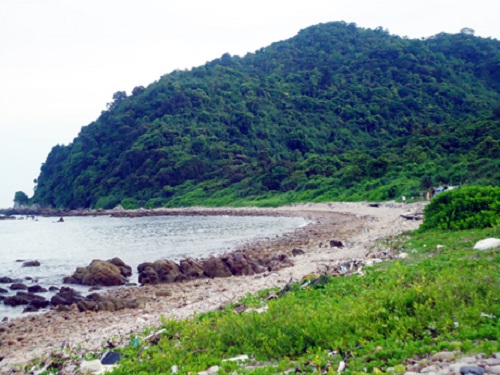
Bai Tu Long National Park is a protected area zone in northeastern Vietnam. It was established in 2001, succeeding from the former Ba Mun National Conservation Zone. It is one of seven Vietnamese amphibian national parks which has both terrestrial zone and aquatic zone.

It is located within Bai Tu Long bay, which with Halong Bay forms an impressive scenery of sea and islands. Including thousands of islands and rocks, they create one of the most beautiful bays in the world. Visit Bai Tu Long Bay with Halong bay tours

According to legend, an immense dragon descended to Ha Long Bay (meaning ‘’Descending Dragon’’) millions years ago, dropping numerous eggs. These eggs hatched forming thousands of rocks and islands. The tail of the dragon extended far to the sea, forming Bach Long Vi (meaning ‘’The Tail of the White Dragon’’). As she returned to heaven, she said good bye to her offspring at the Bai Tu Long Bay (means ‘’The dragon parts the offsprings’’).


Now the Park is part of Van Don district, 20km distant from Cai Rong town.

Geography
The exactly geographical position is in a rectangle between 20o55’05″ and 21o15’10″ North latitude, 107o30’10″ and 107o46’20″ East longitude. It administratively consists of 3 communes : Minh Chau, Van Yen and Halong city of Van Don district. Travel Halong with Dragon Pearl Junk

It is composed from a terrestrial area of 61.25 km2 and an aquatic area of 96.58 km2. The zone includes over 40 islands and rocks which form three groups : Ba Mun group, Tra Ngo group and Sau group. The aquatic area includes the sea zone between the islands and the narrows between the park area and the land area which has boundary of 1 km offshore. The National Park also includes a buffer zone of approximately 165.34 km2 , which is located in a larger area including 5 communes : Minh Chau, Van Yen, Ban Sen, Quan Lan and Halong. The total population of the core zone and the buffer zone is around 24.000. Read more: Vietnam travel

Ecosystem
The National Park includes five kinds of ecosystems : Rain Broad Leaves Forest, Limestone Forest, Littoral Forest, Coral Area and Shallow Water Area.

The Rain Broad Leaves Forest area is mostly secondary forest. The average canopy covers 50 – 90%. 494 species belonging to 337 genera of 117 families have been found in this type of ecosystem. Some endangered species include Cycas balansae, Radix marindae officinalis, Ardisia sylvestris Pitard, Smilax glabra, Leopard cat (Prionailurus bengalensis), Indian muntjac (Muntiacus muntjak), Small Indian civet (Viverricula indica), Large Indian civet (Viverra zibetha).

The Limestone Forest area is forest growing in poor soil with particles of limestone on rocky islands. Some rare animals found there include Serow, Rhesus macaque.

The Littoral Ecosystem in the park is small areas surrounding the islands. It has a rather large tidal variation and is biologically highly diverse with 251 species including 19 species of mangrove, 17 species of seaweed , 29 species of marine worms , 149 species of molluscs, 22 species of crustaceans and 15 species of echinoderms.

The Coral area is located from the water depths of low tide to 10m deep. 409 species have been found including groupers, sea bass, crabs, snails, abalone and seaweeds.

The Shallow Water area covers a large area around the islands, beyond the tidal area and extending from 1km to around 4km. These areas have not been profoundly researched but 539 species have been found.

Bai Tu Long Bay overview

Bai Tu Long is a beautiful Bay lying within the area of the gulf of Tonkin, on the northeast of Vietnam. The bay comprises a part of Halong’s sea, Cam Pha town and Van Don Island District. It shares the border with Halong Bay on the southwest, with the sea on the east, with Cam Pha town on the west and with Co To island district on the northeast. Bai Tu Long Bay includes hundred of islands and islets, several among which are residence for local people.

Along with Halong Bay, Bai Tu Long Bay is one among the wonderful natural wonders, with beautiful islands and long-white-sandy beaches. Bai Tu Long is well-known for foreign tourists not only for its natural beauty, but also for a special tourist attraction – Bai Tu Long eco-tourist site. Bai Tu Long eco-tourist site lies within the area of Van Don Island district. It covers a total area of 100 ha with over 10km coastline. The construction style is the combination of the Asian and Western architecture style with coastal self-contained stilt houses harmoniously lying among the natural scenery.

Bai Tu Long National Park is another must-see destination, which represents Vietnam’s sea preservation site, which has attracted a larger number of both domestic and foreign tourists.

Bai Tu Long Bay’s eco-system is a highly diverse one with typical ecosystems such as mangrove forest, coral reef, tropical forest ecosystems. It is estimated that there are 391 species of marine creatures, most of which bring about high economic and scientific value.

Bai Tu Long Bay has great potential for developing tourism. Recently, the Bay has received much concern from visitors. With fascinating beauty and originated landscape, Bai Tu Long Bay promises to be a popular tourist attraction in coming time.

Thứ Tư, 15 tháng 10, 2014

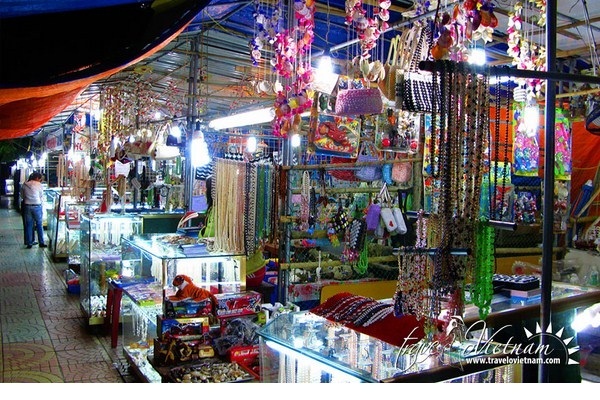
Shopping in Halong Bay

Shopping is an essential part for any tourists. From shopping, tourists can learn more about culture and society of place that they visit, as well as bring home some nice souvenirs for their friends or family. There are several locations for tourists to purchase excellent souvenirs, but tourists should be aware of some issues that might negatively influence their shopping time here. Halong bay tours
One of the most serious problems in not only Halong City but also in various tourism spots in Vietnam is related to the price of products, or the way that sellers set prices for their goods. If tourists spend time on shopping places in this city, particularly at markets where prices have no apparent range and standard, they are usually ask for higher price for actual price of the products. Often, these prices can be 1.5 times higher than actual cost, but in some places where sellers are extremely avaricious, they can be 2 or 3 times higher. Therefore, suggestion to tourists is to carefully research about average price range of products that they desire to purchase before to not to be charged by sky high price. Tourists should bargain for a better price if they think the product is overpriced. However, tourists should not bargain in supermarkets or shopping centers, where prices are already set. 
Indochina Sails cruise halong
Shopping in Halong Bay

Another issue that tourists should be aware of is fake products. Halong City is located in Quang Ning Province, where has border with China. Therefore, fake products from China are bought frequently by local sellers to earn more profit. Therefore, tourists are recommended to check the quality and origin of products thoroughly before purchasing, as well as shop at ensured places such as shopping mall or authorized shops.

Thứ Năm, 9 tháng 10, 2014

How to get to Halong Bay

Thanks to its popularity, Halong Bay cruise is quite accessible from just anywhere in Vietnam and neighbouring countries. Many visit Halong Bay on a larger international cruise ship which dock in Cai Lan International Port (about 10 minutes from Halong Bay). Others choose to fly to Hanoi (180km) or Hai Phong (80km) airport and take a road trip to the Bay. 

By Car 
The most popular way to get to Halong Bay is by road, which follows Highway 18 that passes by Tuan Chau Island, Bai Chay Road and Hon Gai Bridge. If you travel from Hanoi, most cruise trips will arrange transfer from your hotel to the pier for you (either cruise bus or private car). An average trip without traffic will take at least 4 hours for one way. Read more: V’spirit crusie Halong bay

By Air 
From Danang, Nha Trang and Ho Chi Minh City, you can fly either to Hanoi or Hai Phong Airport and get a car transfer to Halong Bay. From other Southeast Asia countries, you also need to fly into one of these two airports to get access to Halong Bay. 
How to get to Halong Bay


By Train 
There used to be a rail-line that connects Hanoi and Halong Bay in 2010, however, it has been discontinued and thus traveling by train to Halong Bay is not possible.  Read more: Travel to Vietnam

Other Means 
You can also travel to Halong Bay on helicopter which takes about 1.5 hour and it is only possible from Hanoi. This service is exclusively run by Northern Vietnam Helicopter Company and it is quite a costly option to reach Halong Bay.